- Home/
- Buy Clomid in Online Pharmacy United Kingdom – Fast UK Delivery
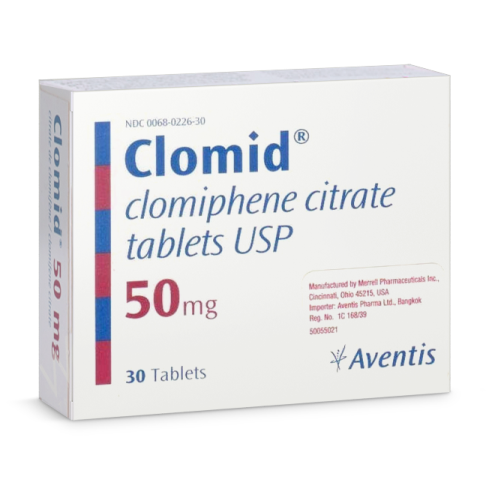
| Medicine Name | Clomid |
|---|---|
| Main Active Substance | Clomiphene |
| Intended Use | Treatment of Female Infertility (Ovulation Induction) |
| Pill Strengths | 50 mg tablets (most common), sometimes 25 mg or 100 mg available |
| How Quickly It Works | Ovulation is usually stimulated within 5–10 days after completing a treatment cycle |
| How Long Effects Last | One cycle of treatment induces ovulation for that cycle only; effect does not persist into subsequent cycles without further doses |
| Dosage Schedule | Typically taken daily for 5 days early in the menstrual cycle |
| Prescription Needed in UK? | Yes, prescription required according to the Medicines and Healthcare products Regulatory Agency (MHRA) |
| Typical Cost in UK | £15–£50 per treatment cycle (excluding consultation and prescription fees) |
Clomid: Pathways to Pregnancy in the United Kingdom
Clomid is a prescription-only medication used in the UK to help women facing infertility related to ovulation problems. It works by stimulating the body’s own hormonal cycle to trigger egg release, making it a widely recognised option for those struggling to conceive. In the United Kingdom, Clomid is available under medical supervision and regulated by the MHRA to ensure both safety and legal compliance.
Infertility: How Common and How Solvable?
Female infertility is far more common than most realise—causing distress, doubt, and isolation for many. According to the National Institute for Health and Care Excellence (NICE), approximately one in seven couples in the UK experience difficulty conceiving—that’s over 3.5 million people. The World Health Organization (WHO) also notes that ovulation disorders, the primary indication for Clomid, account for around 25% of all cases of female infertility (WHO, 2023).
The positive news: modern fertility medicine, including ovulation induction with medications like Clomiphene, offers effective solutions for a substantial proportion of women. In most cases, infertility related to ovulation can be managed with straightforward treatment. The path ahead can feel uncertain, but you are not alone and the problem is usually solvable—often with a few well-guided steps.
How Clomid Addresses Female Infertility: Mechanism and What to Expect
Clomid (Clomiphene) acts by influencing the hormonal feedback system that regulates ovulation. In women who are not ovulating regularly, the body often fails to release enough Follicle Stimulating Hormone (FSH) and Luteinising Hormone (LH)—the signals required for the ovaries to mature and release an egg.
- What Clomid does: It blocks oestrogen receptors in the brain, making your body think oestrogen levels are low.
- How this helps: The pituitary gland responds by releasing more FSH and LH, increasing the chances that an egg will mature and be released (ovulation).
- What you notice: You do not feel the effect directly, but ovulation is likely to occur about 5–10 days after a treatment cycle. Some women notice ovulation pain or changes in vaginal discharge, but many have no physical symptoms. The practical consequence is increased likelihood of conception if intercourse is timed with ovulation.
In clinical practice, ovulation occurs in about 70–80% of women treated with Clomiphene, though pregnancy rates are lower because other factors affect fertility. According to NICE, a typical course is up to six cycles, with regular reviews for safety and effectiveness. Results vary: some women conceive in the first cycle, while for others it may take several months or require additional interventions.
Is Clomid Right for Me? Recognisable Scenarios Table
| Your Situation | Recommended Option | Reasoning |
|---|---|---|
| You have irregular or absent periods and have been diagnosed with an ovulation disorder (e.g. polycystic ovary syndrome) after medical evaluation | Clomid is often a first-line option | It directly targets ovulation problems and has a proven record of effectiveness in these cases |
| Your partner has confirmed male factor infertility (very low sperm count or poor sperm function) | Clomid is usually not sufficient alone | Treating ovulation will not address male fertility issues; referral to a fertility specialist for combined management is needed |
| You have regular menstrual cycles but have not conceived after 12+ months of trying | Clomid may not be the first choice | Other factors such as tubal blockage or unexplained infertility may be involved, so further testing is recommended before starting Clomid |
| You have already tried Clomid for six cycles without success | Alternative approaches should be considered | Prolonged use offers little added benefit and may increase risk of side effects; discuss with your fertility team |
| You are over age 38 and have failed to conceive despite regular cycles and attempts | Clomid may be less effective | Fertility declines with age; time-sensitive strategies such as IVF may be more appropriate |
If you see yourself in any of the above scenarios, it is essential to match treatment to your individual situation. Clomid is highly effective for specific causes of infertility—mainly those involving ovulation failure—but not a universal solution. A fertility specialist in the UK can help you determine if this is the optimal starting point.
Practicalities: How Clomid is Used and What Happens in Real Life
- Typical Course: Clomid is usually started on day 2–5 of your menstrual cycle and taken once daily for 5 days. The starting dose is commonly 50 mg, but may be adjusted up to 100 mg or more if ovulation does not occur.
- With or Without Food: It can be taken with or without food. Swallow tablets whole with water.
- Sexual Timing: Ovulation typically occurs 5–10 days after the last tablet. Timed intercourse (every 1–2 days during the fertile window) increases chances of success.
- If a Dose is Missed: Take it as soon as remembered if within 12 hours. If not, skip the missed dose—do not double up the next day. Continue the rest of the course as prescribed.
- No Ovulation After a Cycle: Your healthcare team may increase the dose in future cycles or consider further evaluation. Clomid is typically tried for up to six cycles; if there is still no ovulation, alternative strategies are explored.
- What is Normal: Most women notice no symptoms during treatment. Some experience mild pelvic discomfort, tender breasts, or mood changes—these are usually temporary and resolve on their own. A positive ovulation predictor test or blood test from your doctor confirms success.
- When to Seek Medical Advice: If you develop severe pelvic pain, visual disturbances, or signs of ovarian hyperstimulation (severe bloating, shortness of breath), contact your healthcare provider immediately.
To maximise success and safety, Clomid should always be used under the guidance of a fertility specialist or GP experienced in reproductive medicine. Monitoring with ultrasound or blood tests may be recommended to track response and reduce risks.
Risks and Safeguards: Can I Use Clomid Safely?
Who Should Not Use Clomid? (Contraindications Explained)
- Liver Disease: Not recommended if you have significant liver dysfunction because the medication is metabolised by the liver and impaired function increases risk of toxicity.
- Unexplained Uterine Bleeding: Do not use until the cause is clarified, as some causes (e.g. cancer) would be worsened by hormone therapy.
- Ovarian Cysts (other than PCOS): Clomid may worsen non-PCOS ovarian cysts because it stimulates further ovulation and can enlarge existing cysts.
- Pregnancy: Clomid must not be taken during pregnancy because of potential risk to the fetus.
- Known Allergic Reaction to Clomiphene: Patients with a history of sensitivity should avoid re-exposure to prevent serious allergic responses.
What Side Effects Might I Experience?
- Common and Usually Mild (1 in 10 or more): Hot flushes, abdominal discomfort, bloating, breast tenderness, nausea, and headaches. These are temporary and usually resolve when the treatment is stopped.
- Occasional (1 in 100): Mood swings, visual disturbances (blurred or spots), dizziness, and mild ovarian enlargement. Visual symptoms should always be reported to your doctor promptly, as continued exposure may worsen them.
- Rare but Serious: Ovarian hyperstimulation syndrome (OHSS)—signs include severe abdominal pain, swelling, vomiting, or rapid weight gain. Allergic reactions such as rash, swelling, or difficulty breathing are extremely rare, but require urgent medical attention.
If you notice signs of severe allergy (swelling of tongue or throat, difficulty breathing) or severe OHSS, dial NHS 111 or, in an emergency, call 999 for immediate help.
Does Clomid Interact With Other Medicines?
- Hormonal Medicines: Taking Clomid with other fertility drugs (e.g. gonadotropins) should only be done under specialist guidance to avoid excessive ovarian stimulation.
- Alcohol: No direct interaction, but limiting alcohol is best during fertility treatment for both safety and improved success rates.
- Other Medications: Most common prescriptions do not interfere with Clomid, but always inform your doctor about all medicines, including herbal remedies. Some drugs affecting liver enzymes (e.g. anticonvulsants) may alter Clomiphene metabolism.
Clinical data on specific drug-drug interactions with Clomid is limited, so caution and medical oversight are advised when combining with other treatments.
Alternatives and Comparisons: Is There a Better Option?
| Treatment | How It Works | For Whom | Typical Success Rate | Limitations |
|---|---|---|---|---|
| Clomid (Clomiphene) | Stimulates ovulation by increasing FSH/LH secretion | Women with ovulation disorders, especially PCOS | Ovulation in 70–80% of cases (NICE, 2022) | Less effective in women over 38 or with unexplained infertility; not suitable if other infertility factors are present |
| Letrozole | Aromatase inhibitor, reduces oestrogen and triggers FSH release | Often used in PCOS; considered when Clomid is ineffective | Comparable or slightly higher pregnancy rates than Clomid, particularly in PCOS (NICE, 2022) | Not licensed for infertility in UK but used off-label; requires specialist prescription |
| Gonadotropin injections | Directly stimulates ovaries with FSH/LH | Women unresponsive to tablets or with more complex infertility | Higher pregnancy rates but increased risk of multiple pregnancy/OHSS | More expensive; requires close monitoring and injections |
| IVF (In vitro fertilisation) | Eggs fertilised outside the body, embryos transferred to womb | Used for multiple infertility causes or after failed simpler treatments | Variable, age-dependent; typically 20–30% per cycle under 35 (HFEA, 2022) | Invasive, costly, emotional impact; best reserved for complex or persistent infertility |
Clomid remains the first-line oral treatment for women with ovulatory dysfunction, especially in PCOS, due to its established safety, cost-effectiveness, and ease of use. Letrozole is increasingly considered, especially for PCOS, though in the UK it is not formally approved for infertility. Injections and IVF are reserved for cases where oral options have not succeeded or where other factors demand complex interventions. The “best” choice depends on your diagnosis, age, and personal priorities.
What You Will Actually Pay: Clomid Treatment Costs in the UK
| Cost Item | Amount | Note |
|---|---|---|
| Initial GP or Fertility Specialist Consultation | £50–£250 | Private clinics charge more; NHS may cover this for some patients |
| Prescription Charge (NHS England standard) | £9.65 per item | Per prescription; may vary in Scotland, Wales, NI (sometimes free) |
| Clomid Tablets (per cycle) | £15–£50 | Varies by brand and pharmacy; some online pharmacies may be higher |
| Monitoring (Ultrasound, blood tests, if not NHS covered) | £50–£200 per cycle | Private sector only; NHS covers for eligible patients |
| Delivery (if ordered online) | £3–£7 | Standard postage |
| Total | £77–£516 | Depending on private/NHS route and monitoring required |
The real cost depends on whether you use NHS or private routes. NHS patients may pay only for the prescription, while private cycles include consultation, medication, and monitoring. Online pharmacies in the UK can dispense Clomid legally but require a valid prescription. Delivery is generally discreet and quick.
Unresolved Concerns: What If I Need Further Help?
Some women wonder: what should I do if Clomid does not work after several cycles, or if I am not eligible for it? The next steps may involve referral for more detailed investigations—such as checking fallopian tube patency or partner’s fertility—or moving to alternative treatments like Letrozole, injectable medications, or assisted reproduction (IVF). The UK’s regulatory environment means all fertility treatments are closely supervised by the Human Fertilisation and Embryology Authority (HFEA), ensuring high standards and patient protection.
If at any step you feel uncertain, overwhelmed, or unsure about your options, UK fertility clinics and reputable patient charities such as Fertility Network UK offer support, clear information, and practical guidance. The right next move is always one that fits your specific medical context and personal values.